
How to Track Dealer Listing History by VIN

That used car has been sitting on the lot for three months. The dealer has dropped the price twice. Before that, another dealership tried to sell it for two months and gave up.
You'd want to know all of that before negotiating, right?
Tracking a vehicle's dealer listing history by VIN reveals exactly how long it's been for sale, every price change, and how many dealers have tried to move it. This is information dealers assume you don't have—and it shifts negotiating power directly to you.
See the Complete Dealer Listing History by vin
VinPassed tracks dealer listings history by vin, price changes, and days on market. Know exactly how motivated the seller really is.
View Sample Report →Why Dealer Listing History Matters
When you walk onto a lot, the salesperson knows everything about that car's history on their lot: how long it's been there, what they've dropped the price to, how many people have looked at it. You know none of this.
Knowing the dealer Listing history by vin levels the playing field by revealing:
- Days on market: How long the car has been listed for sale
- Price drops: Every reduction from the original asking price
- Multiple dealers: Whether other dealerships failed to sell it
- Listing patterns: Seasonal trends and pricing strategy
- Dealer motivation: How desperate they are to move the vehicle
A car that's been listed for 90+ days with multiple price drops is a very different negotiation than one that just arrived on the lot.
What Listing History Reveals
Here's an example of what dealer listing history by vin looks like:
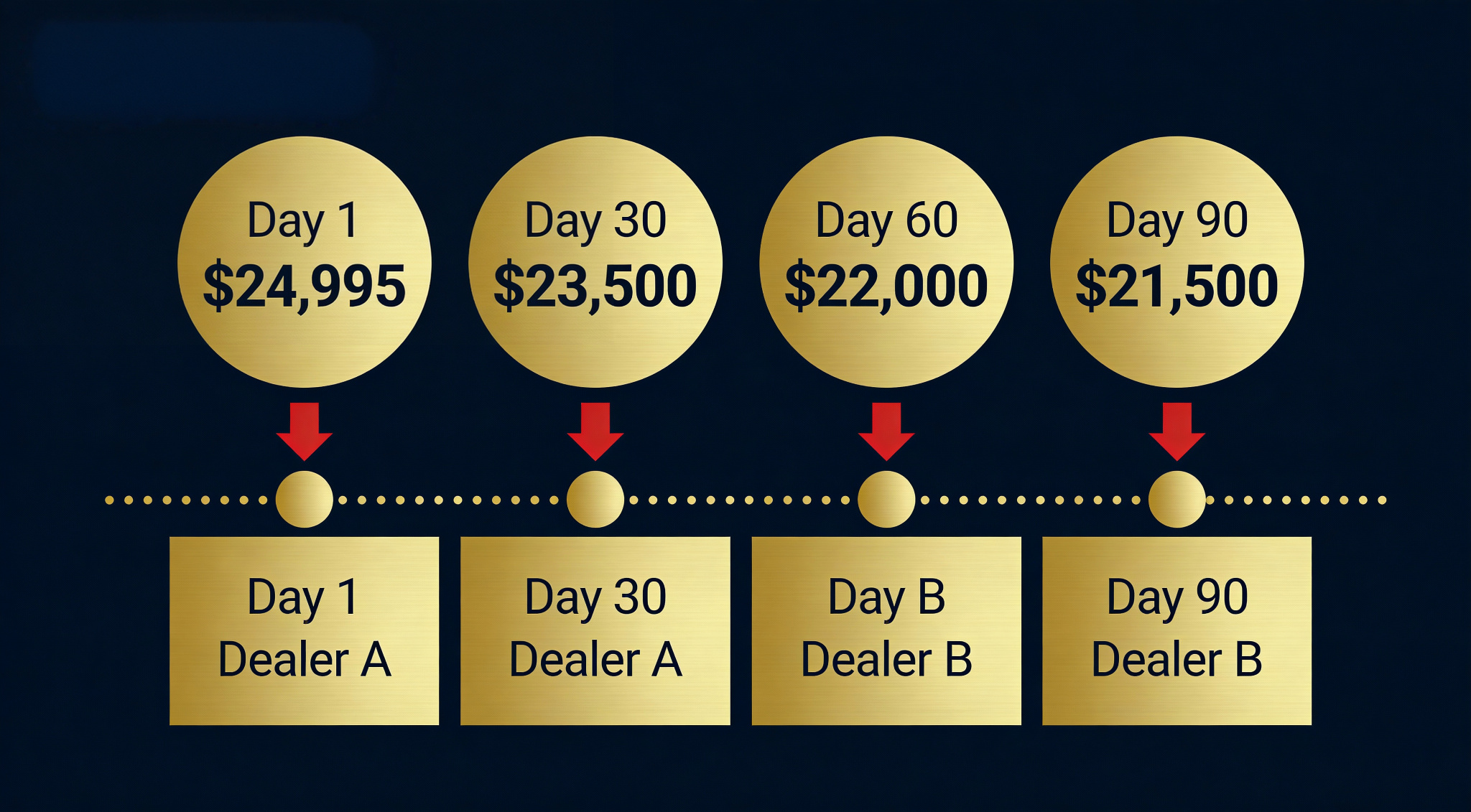
This vehicle has been for sale for nearly three months, dropped $3,495 from the original price, and changed hands between dealers. That's powerful information.
How to Find Dealer Listing History by vin
Standard vehicle history reports (Carfax, AutoCheck) don't track dealer listings history by vin. Here's how to find this data:
1. VinPassed Reports
VinPassed includes dealer listing history by vin as part of every report. You'll see when and where the vehicle was listed, price changes over time, and total days on market.
2. Manual Research (Limited)
You can check sites like CarGurus, which shows listing age and sometimes indicates price drops. However, this only shows the current listing—not previous dealers or the full history.
3. Internet Archive (Time-Consuming)
For highly motivated buyers, the Wayback Machine sometimes captures old dealer listings. This is tedious and unreliable but can work for expensive vehicles worth the research time.
Pro Tip
If a vehicle shows minimal listing history but is being sold at a dealer, it likely came from auction recently. Check the auction data in VinPassed to see what the dealer paid and when they acquired it.
What the Data Tells You
Different listing patterns reveal different situations:
Long Time on Market (60+ Days)
The dealer is paying floor plan interest daily. They're motivated to sell. You have significant negotiating leverage.
Multiple Price Drops
The market has rejected their pricing. Each drop signals desperation. Your offer can be aggressive.
Multiple Dealers
Previous dealers gave up trying to sell it. Ask yourself why. Could indicate problems or just wrong market fit.
Recently Listed
Fresh inventory has less negotiating room. The dealer hasn't felt the pain of carrying costs yet. Wait or negotiate less aggressively.
Price Increase
Rare but happens—usually indicates added equipment or market shift. Could also signal the dealer fishing for uninformed buyers.
Using Dealer Listing History by vin to Negotiate
Here's how to use this information in actual negotiations:
Reference the Time on Market
What to Say
"I see this car has been listed for 78 days now. I'm sure you'd like to free up that floor space. If you can do $19,500 out the door, I'll take it today."
Acknowledge Price Drops
What to Say
"This was listed at $24,000 two months ago and you've already dropped it to $21,500. The market is telling you something. I'm offering $19,000, which gets this car off your lot today."
Mention Multiple Dealers
What to Say
"I noticed this vehicle was at another dealership before you acquired it. It's been on the market for over 100 days total. I'm prepared to buy today at $18,500. Can we make that work?"
Don't Be Confrontational
Present the data matter-of-factly, not as an attack. You're demonstrating knowledge, not trying to embarrass the salesperson. Keep the tone professional and deal-focused.
What Carfax and AutoCheck Don’t Show
Traditional vehicle history reports focus on accidents, title issues, and service records. They don't track retail listings. For a detailed breakdown, see our Carfax vs AutoCheck comparison:
| Data Point | Carfax | AutoCheck | VinPassed |
|---|---|---|---|
| Accident history | ✅ | ✅ | ✅ |
| Title records | ✅ | ✅ | ✅ |
| Dealer listing history | ❌ | ❌ | ✅ |
| Price drop tracking | ❌ | ❌ | ✅ |
| Days on market | ❌ | ❌ | ✅ |
| Auction sale prices | ❌ | ❌ | ✅ |
This data gap is why dealers have traditionally held the advantage. They know exactly how their inventory has performed. Now you can too. Learn more about what Carfax doesn't show.
Red Flags in Listing History
Sometimes listing history reveals problems beyond negotiating leverage:
Frequent Relisting
If a car has been listed, delisted, and relisted multiple times, previous buyers may have discovered issues during inspection. Ask for pre-purchase inspection records.
Dramatic Price Cuts
A sudden 20%+ price drop often signals a discovered problem—mechanical issue, title problem, or damage found after acquisition. Investigate before assuming it's a deal.
Bouncing Between Dealers
Multiple dealer transfers in a short period suggests the car keeps getting rejected at auction or through dealer trades. There's usually a reason cars become "hot potatoes." Check auction photos to see if damage explains the pattern.
Disappearing and Reappearing
If a car was listed, disappeared for months, then reappeared, it may have been repaired, had title work done, or been rejected by a buyer. The gap period deserves scrutiny. This is one way dealers hide accident history.
Protect Your Purchase
Once you've used listing history to negotiate a fair price, protect your investment with appropriate coverage.
VIP Warranty offers exclusionary coverage for vehicles up to 250,000 miles. If that long-sitting car develops issues after purchase, you're protected. It's peace of mind that complements your pre-purchase research.
The Bottom Line
Dealer listing history is information sellers have always had—and buyers haven't. Until now.
A VinPassed report shows you:
- How long the vehicle has been for sale
- Every price drop along the way
- Whether other dealers failed to sell it
- Combined with auction data: what the dealer actually paid
This transforms negotiation from guesswork into strategy. You know their position. You know their motivation. You know exactly how much room exists in the price.
That's how you negotiate from strength.
Get the Full Picture
Get a VinPassed Report for $25
Listing history • Price drops • Days on market • Auction data • Complete history
Check Any VIN Now →Frequently Asked Questions
Does Carfax show how long a car has been for sale?
No. Carfax tracks ownership, accidents, and service history—not retail listing data. To see days on market, price changes, and dealer history, you need a service like VinPassed that specifically tracks listing information. See what else Carfax misses.
How many days on the lot is too long?
The industry average is around 45-60 days. After 60 days, dealers become motivated. After 90 days, they're typically eager to move the vehicle. After 120 days, you have significant negotiating leverage.
Why would a car sit unsold for so long?
Common reasons include: overpricing, unpopular color or configuration, high mileage for the year, seasonal factors (convertibles in winter), known issues discovered by shoppers, or simply wrong inventory for the market. Not all long-sitting cars are problematic—some are just mispriced.
Can dealers reset the listing clock?
Yes—by delisting and relisting, or by transferring to another dealer in their network. This is why comprehensive listing history (not just current listing age) matters. VinPassed tracks the full timeline across dealers.
Should I avoid cars with long listing history?
Not necessarily. Long listing history is negotiating leverage, not automatically a red flag. Combined with a clean vehicle history and successful pre-purchase inspection, a long-sitting car can be an excellent deal. The key is understanding why it sat—and pricing your offer accordingly. Start with a free VIN check for basics, then get the full report.