The Ultimate Used Car Inspection Checklist

You found what looks like the perfect used car. The price is right, the photos look great, and the dealer swears it's in excellent condition.
But how do you know for sure?
This used car inspection checklist covers 47 critical checks across six key areas. Use it before you buy any used car—whether from a dealer, private seller, or auction. Miss even one of these, and you could drive home with expensive hidden problems. The FTC recommends always inspecting and checking vehicle history before purchase.
Before You Inspect: Check the History
A VinPassed report reveals accidents, damage photos, and hidden issues before you even see the car. Start with data, then verify in person.
View Sample Report →The Six Inspection Zones
A thorough inspection covers six distinct areas. Here's an overview before we dive into the detailed used car inspection checklist:
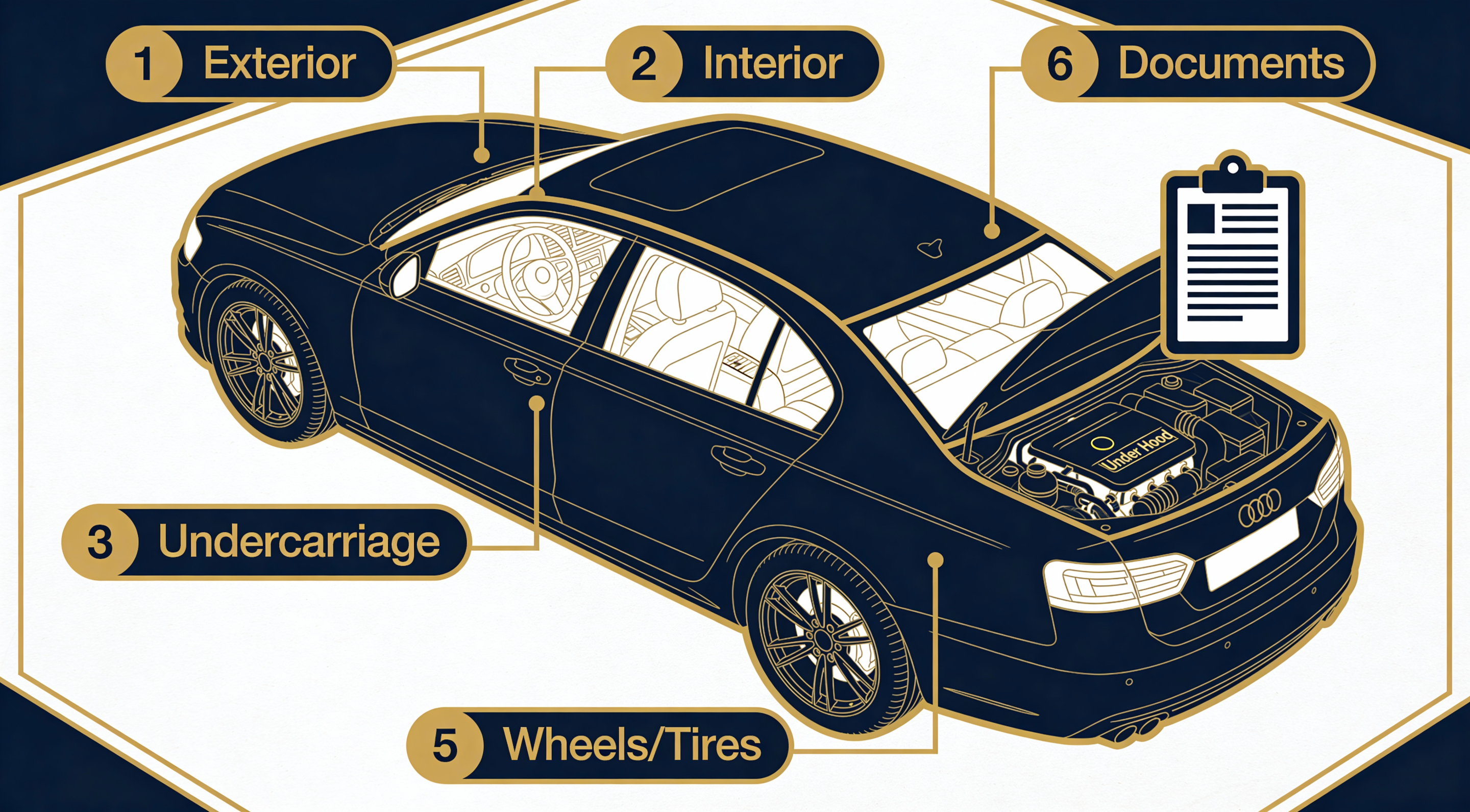
Zone 1: Exterior Inspection
Start by walking around the entire vehicle in good lighting. Look for signs of previous damage, poor repairs, and rust. If you've already checked auction photos, compare what you see to the vehicle's pre-repair condition.
Exterior Checks
12 items- Panel gaps even on both sides
- Paint color matches all panels
- No orange peel texture differences
- No overspray on trim or rubber
- Headlights/taillights match (not cloudy vs clear)
- No rust on body panels or wheel wells
- Doors open/close smoothly
- Trunk/hood align properly
- Glass free of chips and cracks
- Tires match (brand, size, wear)
- Tire tread depth adequate (penny test)
- No frame damage visible at corners
Paint Inspection Tip
Use your phone's flashlight at a low angle against each panel. Repainted areas often show different texture or slight color variation that's invisible in normal light. Also check for masking tape lines along trim edges.
Zone 2: Interior Inspection
The interior reveals how the car was treated and can expose flood damage, smoking, and wear patterns.
Interior Checks
9 items- No musty or mold smell (flood sign)
- No smoke odor in upholstery
- Seats adjust properly (power/manual)
- All windows operate correctly
- A/C blows cold, heat blows hot
- All dashboard lights work (none taped over)
- Infotainment system functions
- Carpet shows wear consistent with mileage
- Check under floor mats for water stains
Flood Damage Red Flags
Check for: musty smell, water stains on seats or carpet, silt or mud in crevices, mismatched interior parts, foggy instrument cluster, and rust on seat rail bolts. Flood cars are often cleaned and sold without disclosure. A salvage title check can reveal flood history before you waste time inspecting.
Zone 3: Under the Hood
Engine bay inspection reveals maintenance history, leaks, and potential mechanical issues.
Under Hood Checks
8 items- Oil level and color (not milky or black)
- Transmission fluid level and color
- Coolant level and condition
- Brake fluid level
- No visible fluid leaks
- Belts not cracked or frayed
- Hoses not brittle or swollen
- Battery terminals clean, no corrosion
What Fluid Colors Mean
- Oil: Amber/light brown = good. Black = overdue for change. Milky = coolant leak (major problem)
- Transmission fluid: Pink/red = good. Brown/burnt smell = worn (expensive)
- Coolant: Green, orange, or pink depending on type. Brown or rusty = neglected
- Brake fluid: Clear to light yellow = good. Dark brown = needs flush
Zone 4: Undercarriage Inspection
If possible, get the car on a lift. This is where hidden damage, rust, and neglect become visible.
Undercarriage Checks
6 items- Frame rails straight, no bends or welds
- No excessive rust on frame
- Exhaust system intact, no holes
- No fresh undercoating hiding damage
- CV boots intact (not torn or leaking)
- Suspension components not worn
Frame Damage Clues
Look for fresh welds, bent metal, or recently applied undercoating. Frame repairs often show different paint/coating than surrounding areas. Compare left side to right side—they should be mirror images. Auction photos often show undercarriage damage that's since been repaired.
Zone 5: Test Drive
A proper test drive should last at least 20-30 minutes and include highway speeds, stop-and-go traffic, and parking maneuvers.
Test Drive Checks
8 items- Engine starts smoothly (hot and cold)
- Transmission shifts smoothly
- No vibration at highway speeds
- Steering tracks straight (no pulling)
- Brakes stop smoothly (no pulsing/grinding)
- No unusual noises (clicks, clunks, whines)
- All gauges read normal
- No warning lights appear
Test Drive Red Flags
- Shuddering during acceleration: Transmission or engine mount issues
- Pulling to one side: Alignment issues, possibly from collision damage
- Brake pulsation: Warped rotors or suspension problems
- Whining from engine bay: Power steering, alternator, or bearing issues
- Clunking over bumps: Worn suspension components
- Delayed transmission engagement: Transmission wear (expensive)
Zone 6: Document Verification
Before signing anything, verify the paperwork matches the car and tells a consistent story. All vehicle history services pull title data from the federal NMVTIS database.
Document Checks
4 items- Title VIN matches dashboard and door jamb
- Title is clean (not salvage, rebuilt, flood)
- Odometer matches title and service records
- Seller name matches title (or has legal transfer docs)
VIN Verification Critical
Check the VIN in three locations: dashboard (through windshield), driver's door jamb sticker, and title. All three must match exactly. Mismatched VINs indicate VIN cloning or title fraud—walk away immediately. You can verify theft status for free at NICB VINCheck.
Before the Inspection: Check the History
Your physical inspection is only half the story. Before you even see the car, run a VinPassed report to uncover:
- Accident history: Including damage that may not be visible after repairs
- Auction photos: See the car before reconditioning—damage the dealer may have hidden
- Title status: Salvage, flood, rebuilt, or clean
- Dealer cost: What they paid, so you know your negotiating room
- Listing history: How long it's been for sale and any price drops
Knowing the history before you arrive lets you focus your physical inspection on verifying repairs and checking areas where damage was reported. Also check for open safety recalls at NHTSA.gov.
When to Get a Professional Inspection
Your used car inspection checklist catches obvious issues, but a professional pre-purchase inspection (PPI) is worth the $100-200 investment when:
- The vehicle is worth more than $10,000
- Vehicle history shows any accidents or damage
- You're not mechanically experienced
- The car is from a private seller (less recourse if problems emerge)
- It's a luxury or European vehicle (complex systems)
- Your gut says something feels off
A good mechanic with a lift sees things you can't. The cost is trivial compared to buying a car with hidden mechanical problems.
After the Purchase: Protect Your Investment
You've done the research, completed the inspection, and negotiated a fair price. Now protect your investment.
Manufacturer warranties typically expire before most used cars are sold. Dealership warranties are limited and often expensive. For comprehensive mechanical protection, VIP Warranty offers exclusionary coverage for vehicles up to 250,000 miles—covering virtually all mechanical components, including many vehicles other warranty companies reject.
Even with a thorough inspection, some problems only emerge over time. Warranty coverage provides peace of mind that your research-backed purchase is protected for the long term.
The Bottom Line on used car inspection checklists
A thorough used car inspection checklist takes time—at least an hour for the physical inspection plus research beforehand. But that investment protects you from thousands in unexpected repairs or buying a vehicle with hidden damage.
Your inspection process:
- Run a VinPassed report for history, damage photos, and upgraded market pricing data
- Complete this 47-point used car inspection checklist during your in-person inspection
- Take a thorough test drive (20-30 minutes minimum)
- Consider a professional PPI for high-value purchases
- Verify all documents before signing
- Protect your purchase with appropriate warranty coverage
Skip any of these steps, and you're gambling. Follow them all, and you'll buy with confidence.
Start Your Research
Get a VinPassed Report for $25
Damage history • Auction photos • Pricing data • Complete picture
Check Any VIN Now →Frequently Asked Questions
How long should a used car inspection checklist take?
Plan for 60-90 minutes for a thorough self-inspection, plus 20-30 minutes for the test drive. If you're getting a professional pre-purchase inspection, add another 1-2 hours. Don't rush—this is one of the biggest purchases you'll make.
Should I inspect a used car from a dealership?
Absolutely. Dealer reputation doesn't guarantee vehicle condition. Many dealer cars come from auctions with unknown history. Dealers are also motivated to minimize issues to make the sale. Inspect every used car the same way regardless of source.
What if the seller won’t let me do a full inspection?
Walk away. A seller who resists inspection is hiding something. Any legitimate seller—dealer or private—should welcome a thorough inspection because it builds buyer confidence. Resistance is a major red flag.
Is a professional inspection worth the cost?
Yes, especially for vehicles over $10,000 or with any reported damage history. A $150 inspection can save you thousands by catching issues you'd miss. Think of it as insurance against buying a problem car.
What’s the most commonly missed issue in used car inspections?
Flood damage. Cleaned flood cars can look and smell normal but have electrical and corrosion issues that surface months later. Always check under floor mats, inside trunk compartments, and look for rust on seat rail bolts. A vehicle history check catches many flood-titled cars before you waste time inspecting.